
Vol 1: Azeroth & Answers
Azeroth comes to D&D, D&D Beyond finally learns how to search, and Mike Mearls revisits the lesson Wizards learned from 4e. Then: 10,000 simulated battles, weapons for martials, mysteries without hidden clues, and social encounters worth negotiating.

CHARISMA CHECK
Nine years after a developer reportedly built D&D Beyond’s original search weeks before launch with an Elasticsearch book and iced coffee, Elliot, Adela, and the D&D Beyond team have replaced it. The new search understands typos, abbreviations and synonyms; prioritizes actual rules over forum posts; filters by ruleset, book and owned content; previews results; and lets you jump directly to the thing you were looking for. Search for “firebolt,” astonishingly, and you now get Fire Bolt.
NOTEWORTHY
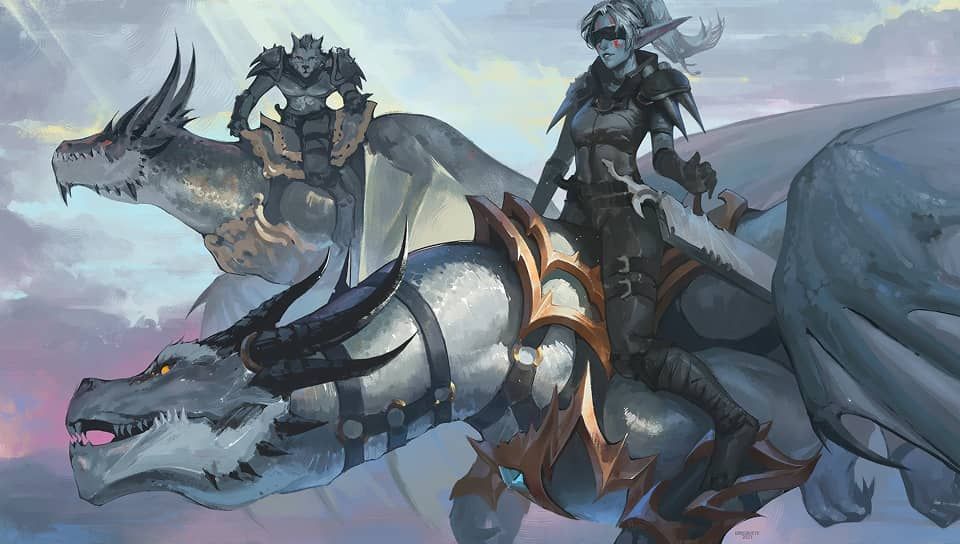
World of Warcraft, Tabletop Edition
As the November 17 release of Dungeons & Dragons: World of Warcraft approaches, there's plenty to unpack. The 256-page book brings Azeroth into 5e with new playable species, subclasses, monsters, spells, factions, professions and seven iconic dungeons. More interesting is the design problem underneath it: how do you make tabletop D&D feel like World of Warcraft without simply recreating an MMO with dice?
Obojima Rolls Into Town
1985 Games’ Obojima has arrived on D&D Beyond with Tales from Yatamon, bringing the setting’s largest city, new subclasses, spells, creatures, backgrounds, feats, magic items and vehicle rules to the platform. The more interesting story continues to be D&D Beyond itself. Partnered content is no longer an occasional marketplace curiosity. Third-party classes, worlds and rule expansions are becoming part of the normal DDB release calendar.
London Calling
Critical Role filled another very large room in London for its October 26 O2 Arena show, continuing the group's transformation of actual play from internet broadcast into touring live entertainment. Attendance numbers aren't official, but the scale itself is worth noting. A D&D-adjacent performance can now credibly occupy venues designed for major music acts.
Diamond Breaks Loose
A bankruptcy court has finally approved the second settlement covering publishers whose inventory became trapped in the collapse of Diamond Comic Distributors. That group includes Paizo and Green Ronin. The wider dispute involved nearly $50 million of inventory at cost, tied up for more than a year while publishers absorbed legal fees, delayed revenue and depreciating stock.
DISCUSSIONS
Arms Race
The martial-caster argument has found a useful new battleground: what kind of expandable subsystem should martial characters actually have?
One proposal is better exotic weapons, with distinctive properties and techniques that give Fighters, Barbarians and other weapon users a toolbox analogous to spell lists. Another argues the answer is feats, particularly more feats available specifically to martial classes.
Both identify the same structural problem. Every new spell can expand an existing caster. Adding a new martial subclass usually expands only that subclass. If Wizards wants martial characters to accumulate new toys across books, they need something designed to accumulate them.
Battle Tested
A designer simulated 10,000 five-on-five combats while developing their RPG and discovered something more interesting than whether the numbers balanced.
The simulation began finding strategies.
Fire caused by grenades killed considerably more combatants than the explosions themselves. Characters discovered emergent combinations and tactics the human playtesters had never tried.
The obvious caveat is that simulated agents aren't players. But as a tool for discovering mathematical exploits, dominant strategies and weird interactions before they reach a table, automated playtesting is only going to become more useful.
Crunch Time
Mike Mearls revisits one of the central lessons Wizards took from 4e.
The designers looked at 3.5 players and concluded: they love crunch. So 4e gave them more.
The problem, in Mearls’ telling, was that the people who really wanted that level of mechanical engagement represented only a slice of the audience. The lesson that eventually informed 5e was not “players dislike rules.” It was that your most engaged players are not necessarily representative of everyone playing your game.
Useful advice for anyone designing from Reddit feedback.
Roll for Initiative
A DM ditching their screen asks a surprisingly practical question: how do you display initiative now?
The simplest answer may also be the best. Don't. Keep the order yourself, announce whose turn it is, then tell the next player they're “on deck.” Others recommend whiteboards, magnets and table tents. Sometimes the interface problem disappears when you stop building an interface.
VIBE CHECK
🎯 GM TIPS
The Writer's Room
One of the more controversial approaches to D&D is also one of the simplest: occasionally let players discuss the story as players.
Not every decision needs to emerge entirely from inside the character's skull. A brief “writer's room” conversation can let the table discuss what would be interesting, dramatic or revealing before everyone drops back into character.
That trades some immersion for stronger collaboration. Whether that's heresy or common sense probably tells you something about the game you want to run.
Leave Some Ma
The Japanese concept of ma is the space between things. The pause in conversation. The empty part of the composition. The silence that gives the next sound weight.
GMs tend to fear empty air and fill it with description, NPC dialogue or another prompt.
Don't.
Ask the question. Describe the room. Reveal the body.
Then shut up.
Time Is a Mechanic
Hit points, spell slots and gold are obvious resources. Time is usually the more interesting one.
If searching the chamber takes ten minutes, resting takes an hour, the cult completes its ritual at midnight and wandering monsters continue moving, players suddenly have meaningful choices without requiring another subsystem.
Track time when time creates consequences.
Don't Pull. Push.
When players aren't engaging with something, the instinct is often to pull harder: another clue, another NPC request, another reminder of the quest.
Try pushing instead.
Make the situation advance toward them. The thief spends the money. The army crosses the border. The monster attacks another victim.
Problems become interesting when they refuse to wait politely for the characters.
🥷 STEAL THIS
Draw Steel Negotiations
Draw Steel gives important NPCs actual negotiation mechanics: Interest, Patience, Impression, Motivations and Pitfalls.
Give an important D&D NPC two things they want, one subject that turns them against the party, and a limited amount of patience. Arguments that touch their motivations improve the negotiation. Push the wrong button and things get worse. Keep rolling badly and eventually the conversation ends.
You can still use Persuasion, Deception, Insight and roleplay. You're simply giving the scene enough structure that the entire negotiation doesn't collapse into one Charisma check.
🍺 HOMEBREW
One clever monster, subclass, spell system, magic item or small mechanical hack goes here.
Keep it tight: what it is, why it's interesting, and one thing the designer is doing differently from official D&D.
🌎 CAMPAIGN TRAIL
The Dark of Hot Springs Island
[IMAGE]
Every issue, we ask a designer to recommend one campaign worth stealing several months of your life.
Mara Vale, independent RPG designer [placeholder contributor]:
The Dark of Hot Springs Island understands something a lot of campaign books forget: the GM doesn't need a plot. They need a place that keeps producing situations.
The island is dense with factions, NPCs, strange locations and things that want other things. You can arrive with almost no idea what the players are going to do, because wherever they go they disturb something already in motion. Instead of preparing sequences of encounters, you learn the island well enough to understand what happens when the players kick it.
The other reason I'd recommend it to a D&D DM is that it's system neutral. You have to do a little conversion work, but that forces you to engage with the material as a campaign rather than a script. If you've ever wondered what people mean when they talk about running a genuinely player-driven sandbox, Hot Springs Island is one of the clearest demonstrations I know.
🎨 CRAFTY
The Theory Underground
What does the cutting edge of tabletop game-design theory actually look like?
A sprawling RPGdesign discussion gathers books, essays, blogs and designers working on everything from information design and player agency to probability, interaction and the relationship between mechanics and fiction.
Less “here are the ten rules of game design,” more trailhead into several different intellectual traditions.
Bring snacks.
🛠️ TOOLS & RESOURCES
Conjurium is a pleasantly focused collection of free tabletop tools: 5.5e character sheets, a battlemap generator, encounter manager, campaign storyboard and wild-magic generator.
The appeal is not that any single tool reinvents game prep. It's that everything is clean, fast and built around things a DM might actually need five minutes before the session starts.
The Roundup
- Every Castle on Earth is almost exactly what the name promises: more than 56,000 castles, fortresses, palaces, fortified towns, manor houses and churches, searchable by type, period, defences and geography. Worldbuilding reference crack.
- 21 Needed Answers for Session 1 asks setting questions from the player's perspective rather than the worldbuilder's. What do people eat? Who has power? What can I actually do here?
- Elmcat counters with Thirty Questions for Sandbox Campaigns, focused specifically on the information players need before they can start making their own plans.
- Kingdoms of Ink turns worldbuilding into rubber stamps: modular castles, landmarks and terrain for quickly prototyping physical maps. Arts and crafts finally fulfills its destiny.
- Moreno Paissan and Angela Gubert have produced an enormous ink-and-watercolour map of Faerûn, with the kind of density that makes you want to start a campaign simply to justify printing it.
- Looking for monsters? W.F. Smith's Making a Cool Monster offers a nine-part checklist covering threats, desires, rewards, powers, weaknesses, ecology and other ways to give the poor yeti some juice.
- FaerunColors lets you preview and build Baldur's Gate 3 dyes on 3D armour models, with more than 120 lore-inspired palettes to browse. Probably useful for character design. Definitely useful for procrastination.
- Also bookmarked: donjon's 5.5 Quick Reference, a 5.5e character simulator for iPad, a Baldur's Gate high-detail map, two hours of Curse of Strahd original music, and a good token generator.
INSPO
STORYTELLING
Stop Hiding the Mystery
A good mystery doesn't require the DM to hide information.
The challenge should be figuring out what the clues mean, not struggling to find them in the first place.
Elmcat makes the useful distinction between a mystery and an investigation. An investigation is the process of acquiring information. A mystery is an epistemic problem: you possess information but don't yet understand what actually happened.
Which means you could hand players the witness statements, map, autopsy and murder weapon at the beginning of the session and still have a mystery.
Patchwork Paladin provides the prep structure that makes this work.
Start with a timeline of what actually happened, including events that will occur unless the characters interfere. Then build an information sandbox around it: clues, witnesses and locations that reveal different pieces of that underlying reality.
Because the GM understands the timeline, clues don't need to be rigidly attached to predetermined scenes. Information can move. Witnesses can disagree. Players can investigate things in the “wrong” order without breaking the adventure.
So distribute information generously.
Let some clues contradict others. Let witnesses misunderstand what they saw. Let details acquire new meaning later.
The players should spend their time forming theories, testing assumptions and deciding what to do with what they've learned.
The mystery isn't the information you're withholding.
It's the understanding they haven't reached yet.
Antagonists, Not Villains
“I’m a fan of antagonists. I’m not a fan of villains.”
Andrew Stanton
That's an unusually useful distinction for DMs.
A villain begins with a moral judgment. An antagonist begins with a dramatic function: someone who wants something incompatible with what the protagonists want.
Build that first.
You can decide how evil they are later.
Set the Scene
Mike Mearls digs into scene setting and the GM's job of giving players enough information to begin making decisions.
The useful principle is simple: description isn't decoration. Its job is to create actionable understanding.
Tell players what they need to imagine the place, then make sure they understand what can actually be interacted with.
Dress for the Story
Baldur's Gate 3 doesn't merely dress characters to look cool. Clothing communicates geography, occupation, wealth, allegiance, culture and personality before anyone opens their mouth.
That's worldbuilding you can steal immediately.
Stop describing every NPC by hair, eyes and height. Tell players what they're wearing and what that clothing implies.
Bonus rabbit hole: FaerunColors, which catalogues lore-inspired palettes around Forgotten Realms factions, gods and archetypes.
ETC
Before Pantone
In 1692, Dutch artist A. Boogert created an extraordinary handwritten guide to mixing watercolour paints, filling nearly 900 pages with colour samples and instructions more than two centuries before Pantone standardized the practice.
The entire manuscript has now been digitized in high resolution.
For anyone who designs maps, books, props or worlds: goodbye afternoon.
The Dog Ate My Character Sheet
Clayton Notestine offers 50 Excuses for Good Players who need to cancel game night five minutes before it begins.
Highlights include childbirth, wolves, Heat, Point Break, Nakatomi Plaza, time dilation in the snack aisle and, finally, diarrhea.
At least one of these is probably already in your group chat.
Elves vs. Dwarves
What if the visual distinction between fantasy cultures came from art history instead of pointed ears and beards?
A useful worldbuilding exercise looks at how architecture, ornament, craft traditions and historical artistic movements can differentiate fantasy peoples before you write a paragraph of lore.
Your dwarves may thank you.
You're reading The Raven, a